Who does this work
People
Wet lab, computation and clinic, working on how genetic variation shapes individual risk.
Wet lab, computation and clinic, working on how genetic variation shapes individual risk.
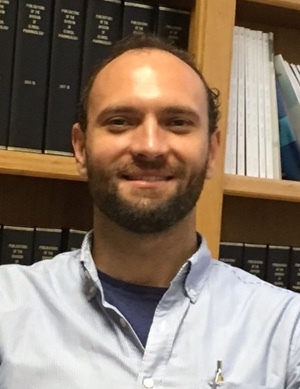
brett.kroncke@gmail.com
(615) 322-2959
Brett founded the lab in 2019 to estimate what genetic variation means for individual risk of arrhythmia. The lab combines high-throughput functional genomics, patient-derived iPSC-cardiomyocytes and Bayesian modeling to resolve variants of uncertain significance in KCNH2, SCN5A, KCNQ1 and RYR2, and builds open, auditable LLM-assisted tools for literature curation.
He is the inventor on the 2022 patent Bayesian Method to Estimate Variant-Induced Disease Penetrance and created VariantBrowser.org. Recognition includes the Stanley Cohen Award for Genomic Discovery (VUMC, 2026), the Cardiac Muscle Society Early Investigator Award (2025) and an AHA Career Development Award (2021–2024).
B.S. Chemistry, University of Wisconsin–Madison; Ph.D. Biophysics, University of Virginia; postdoctoral training with Charles Sanders and Dan Roden at Vanderbilt.
Leads high-throughput characterization of KCNH2 variants and the lab’s iPSC program: reprogramming PBMCs to hiPSCs, differentiating cardiomyocytes, and characterizing them on the Nanion CardioExcyte96. First author on the patient-derived polygenic-score cell lines and lead of the polygenic long QT cellular-model study.
Vanderbilt undergraduate contributing to variant curation and analysis.

Led massively parallel assays of KCNH2 variants with the Vandenberg lab (Am J Hum Genet 2022) and the S3–S5 hotspot scans.
Established the wet lab; CRISPR-Cas9 editing of iPSCs, RYR2 functional assays and KCNH2 variant mapping.
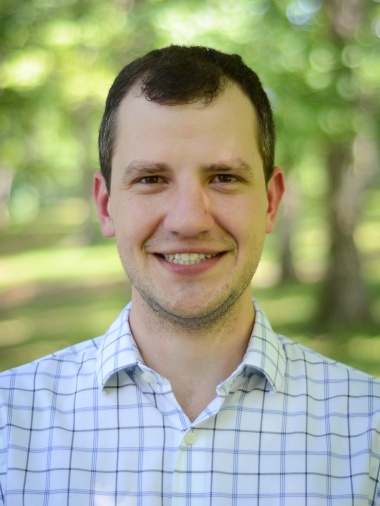
High-throughput discovery of trafficking-deficient Kv11.1 variants and post-test probability of LQT2 for rare KCNH2 variants.
Continuous Bayesian variant interpretation across channelopathies and the Circulation 2024 KCNH2 MAVE + patch-clamp risk-stratification study.
Genotype-specific therapeutic screens (JCI Insight 2025) and the hERG interactome under polygenic load (Mol Cell Proteomics 2026).
Structural and Bayesian analysis of RYR2 missense variants in CPVT; iPSC-CM electrophysiology.
Chancellor’s Scholar; first author on the RYR2–CPVT structural and penetrance study (Circ Genom Precis Med 2026).
Kv11.1 interactome changes in iPSC-CMs from extreme QT polygenic-score donors; ASHG 2024 plenary talk.
Field-potential analysis toolkit, RYR2–CPVT penetrance and Kv11.1 trafficking studies.
First author on the open extracellular field-potential analyzer for iPSC-CMs (Sci Rep 2025).
Contributed to the field-potential analysis tools and polygenic-score iPSC lines.
RYR2–CPVT penetrance and arrhythmia cohort analyses.